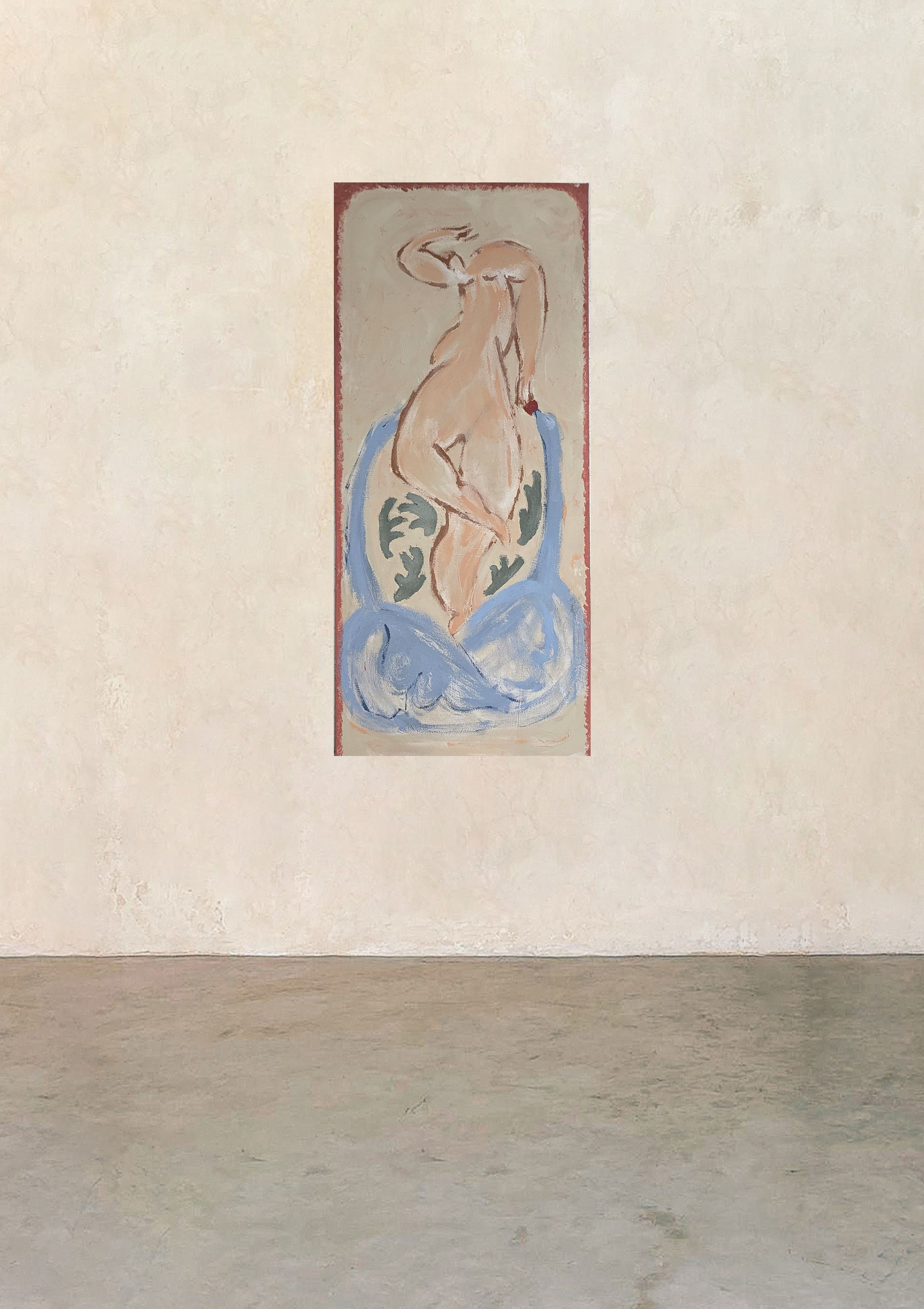
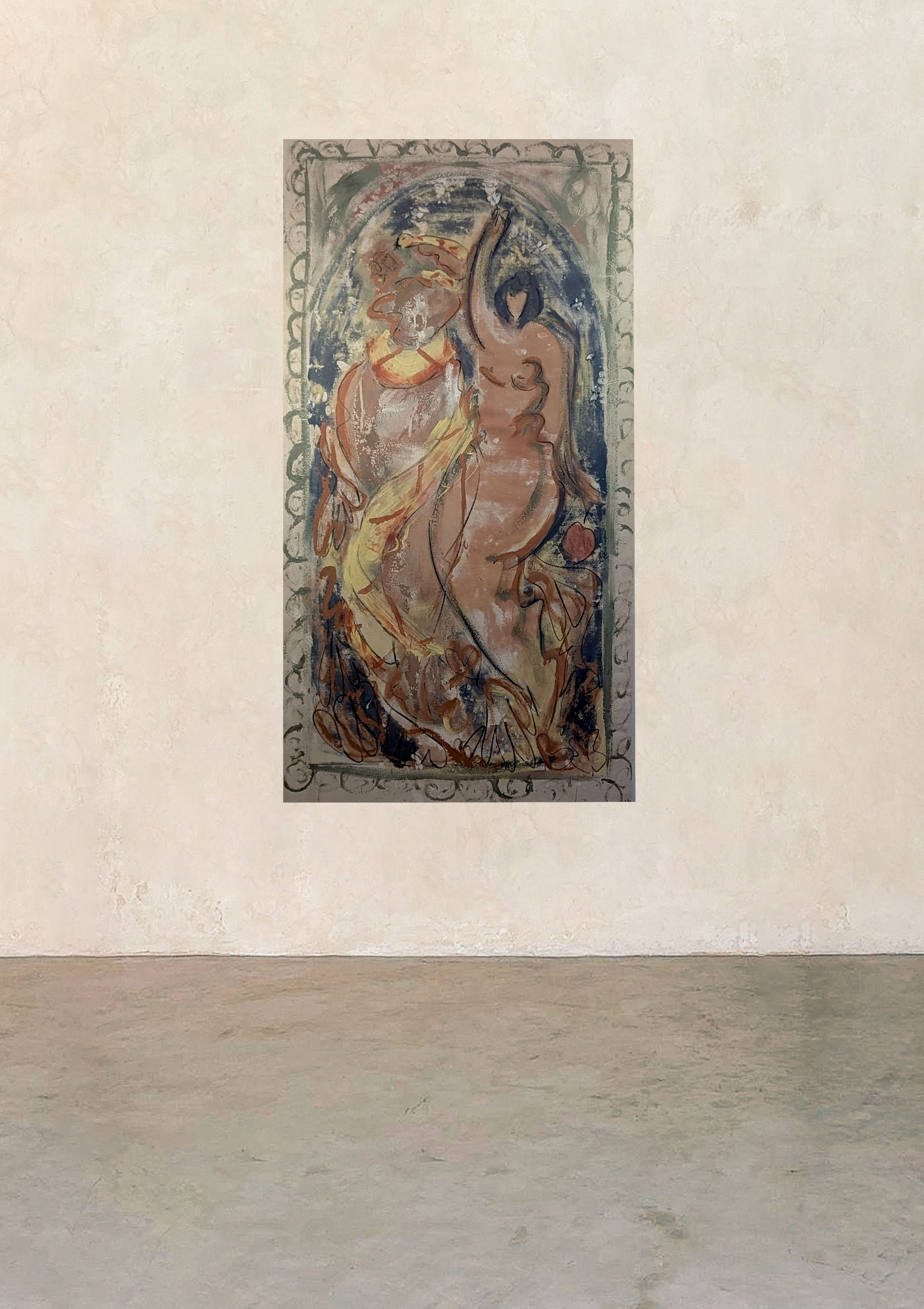
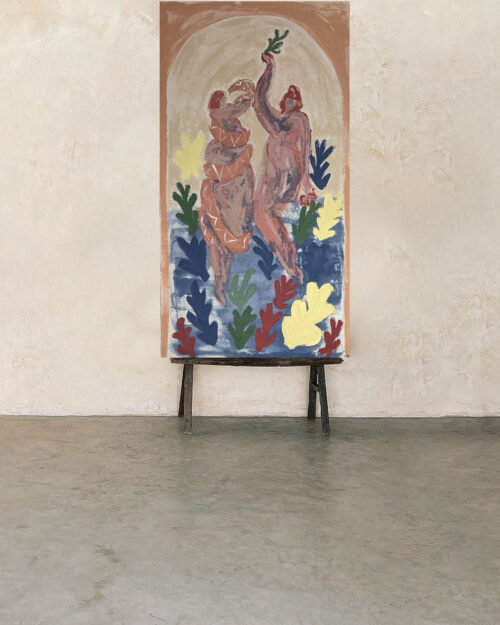
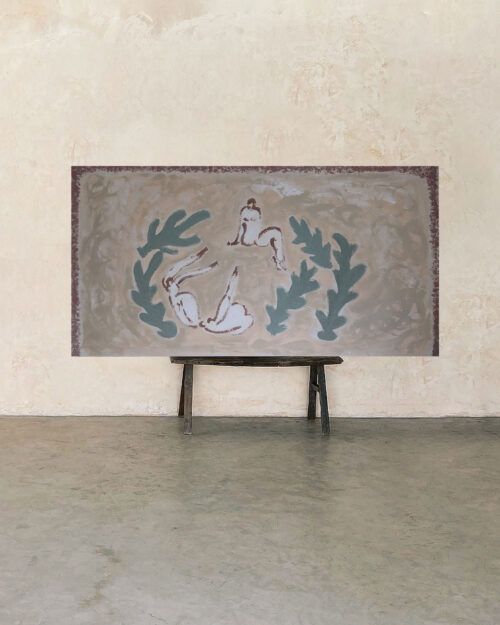
Atheria explores the inner world — the meeting point between the parts of ourselves we embrace and those we find more difficult to accept.
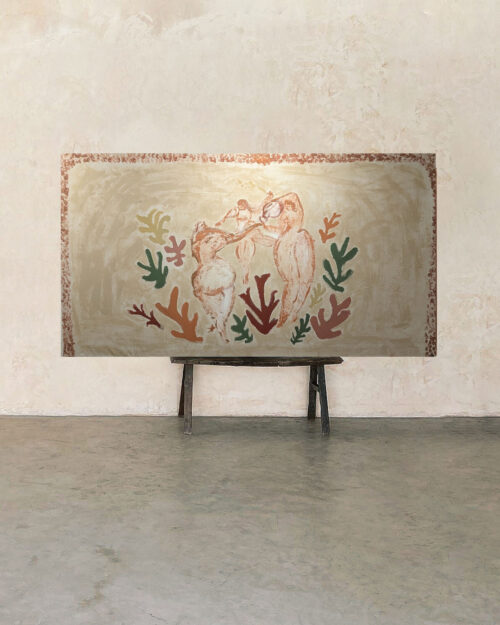
Inspired by Greek mythology, religious symbolism and the psychology of Carl Jung, the series considers the relationship between the inner child, the higher self and the shadow self. Rather than separating these parts, the paintings explore what happens when they are brought together and accepted as part of a whole.
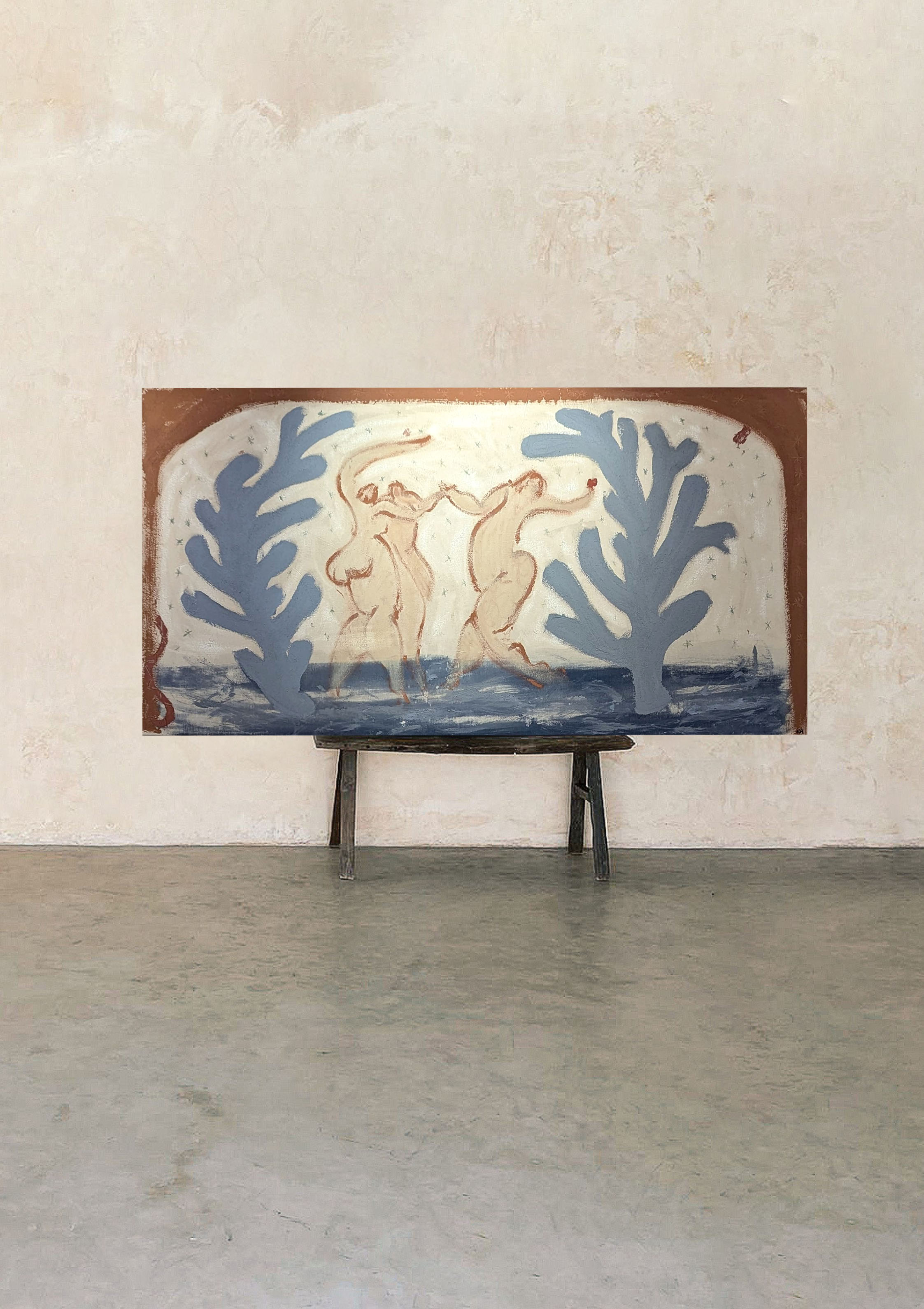
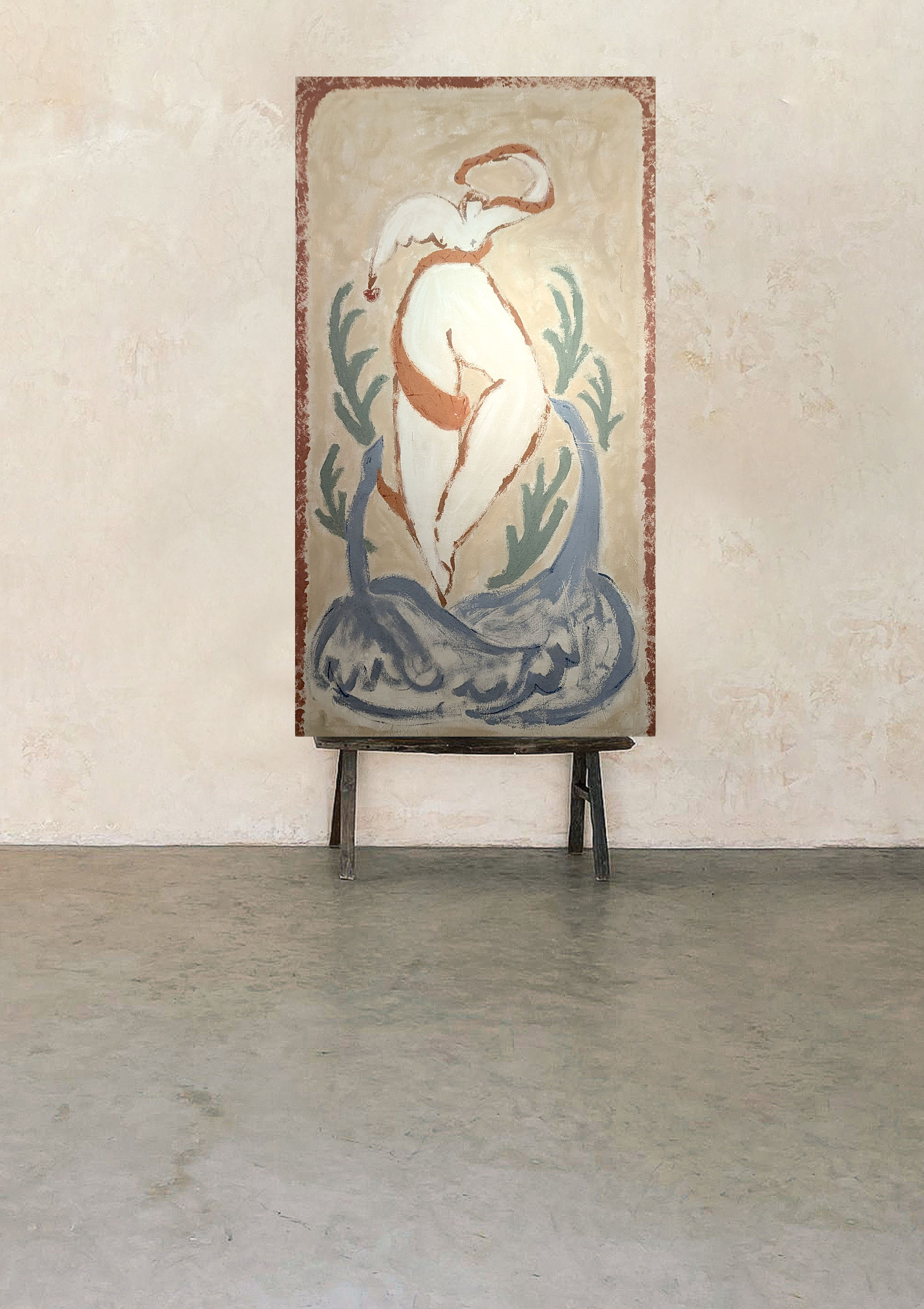
Apples and serpents appear throughout the works as recurring symbols of guilt, shame, temptation and knowledge. Serpents wind around the figures and forms, representing the weight of what we carry, while water surrounds them as a space of movement, release and transformation.
The dancing women became a recurring figure within the series. Their movement represents the alchemising of difficult emotions — allowing what feels heavy to move through the body rather than remain fixed within it. Some figures hold vessels, drawing on the idea of tending to and nourishing the parts of ourselves we might otherwise reject: of watering the shadow self rather than abandoning it.
Swans and elements drawn from the natural world become projections of this inner landscape, allowing the psychological world of the figures to extend beyond the body and into nature.
The name Atheria became a kind of imagined identity for the figure within the paintings — a way of looking into her inner world and asking what might be taking place beneath the surface.
At its heart, the series is about acceptance: acknowledging guilt, shame, joy, desire and vulnerability as different parts of the same self, and finding a way for them to exist together.